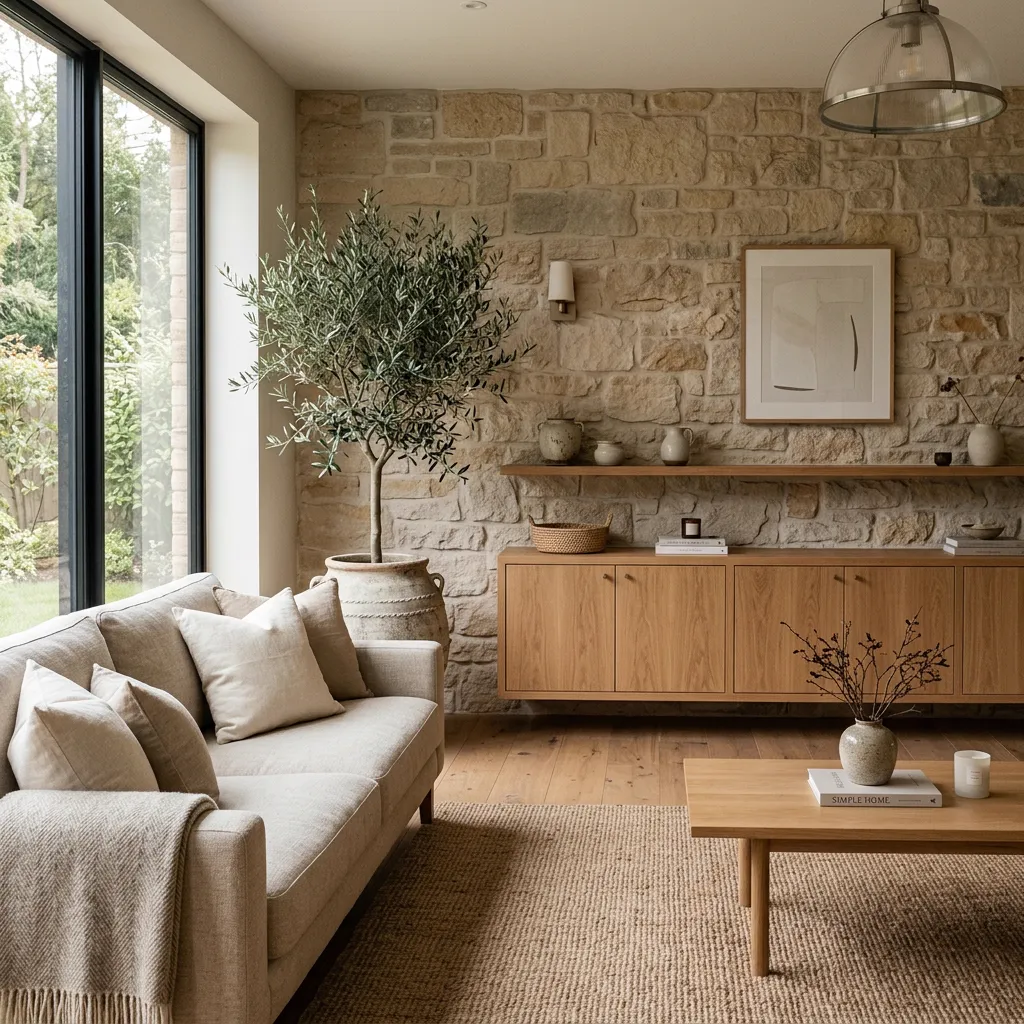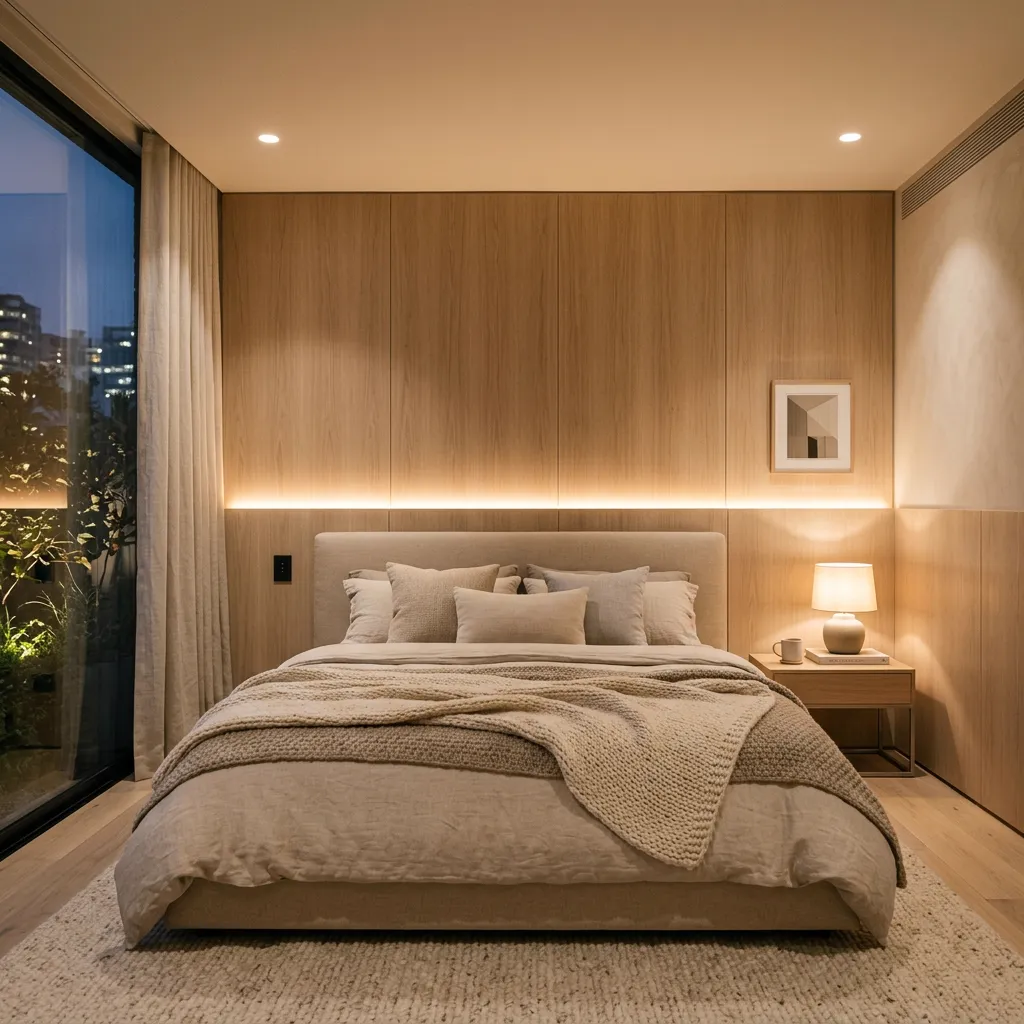
Often, when people think of minimalism, cold, sterile, white walls and gallery-like spaces that lack a sense of cozy living come to mind. However, the 'Warm Minimalism' we embrace aims to blend simplicity with warmth and natural textures, creating homes where people truly live and find peace.
1. The Power of Textures and Natural Materials
The cornerstone of warm minimalism is the honesty of materials. Instead of plain painted walls, kalsomine/lime-based plasters are used; instead of smooth synthetic surfaces, the texture and organic knots of raw oak bring spaces to life. Using living stones like marble or travertine on floors and countertops ensures that every element carries its own unique pattern and character. Linen drapes, woven wool rugs, and jute elements complete this aesthetic with organic softness.
"Warm minimalism is not about owning fewer items; it is about creating soulful spaces with curated, textured materials that grow more beautiful as they age."
2. Light, Shadow, and Sculptural Forms
We focus on designing the voids rather than cluttering the spaces. By placing only the necessary furniture pieces in a room and giving them sculptural silhouettes, sunlight is allowed to play freely on their surfaces. The light entering through correctly positioned fenestrations paints shifting shadow patterns on the walls—acting as the most dynamic and living element of the design.
3. Seamless Balance of Function and Aesthetics
In a warm minimalist home, storage must be invisible. Smartly concealed oak closets, flush doors integrated into wall panels, and built-in shelving remove physical clutter. Outside, only a few meaningful art pieces, ceramic vases, or handmade lighting fixtures should remain to allow the mind to relax and focus on serenity.